

 简体中文
简体中文
 ภาษาไทย
์Noodles
Ingredient Profile & Cooking Guide
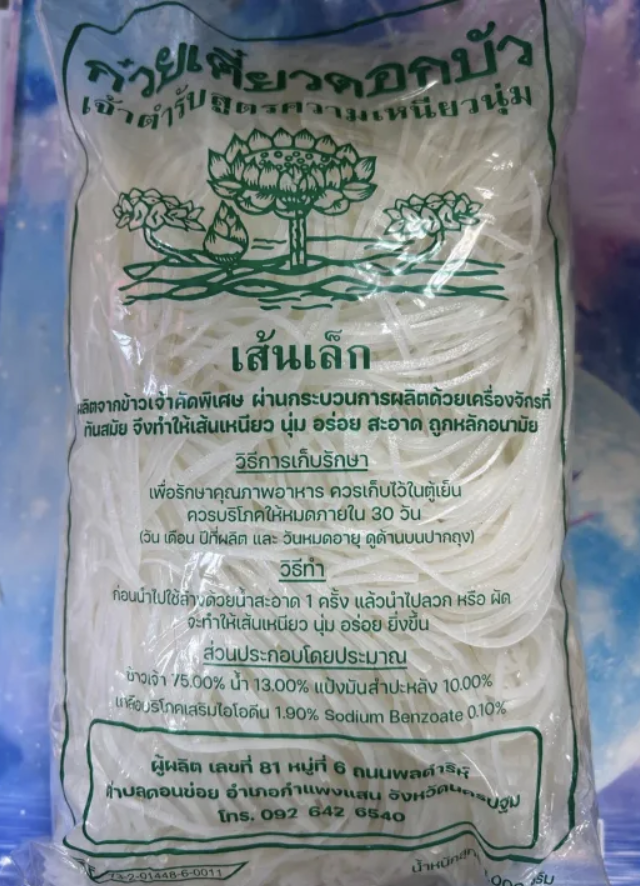


💡 "Sen Lek" or Thin Rice Noodles are the most iconic noodle variety in Thai cuisine. Made primarily from rice flour and water, they strike a perfect balance between softness and a satisfyingly chewy texture.
1. Characteristics and Mouthfeel
The "Al Dente" of Rice Noodles: Unlike the broad richness of Sen Yai (Large Flat Noodles) or the delicacy of Sen Mee (Rice Vermicelli), Sen Lek is prized for its elasticity and chewiness.
Flavor Absorption: These noodles act like a sponge, efficiently soaking up broths and sauces, which ensures that every bite is packed with the flavor of the dish.
Fresh vs. Dried: Fresh noodles offer a superior silken texture, while dried versions (which require soaking before use) are often preferred for their convenience and slightly firmer bite.
2. Culinary Applications
Noodle Soups: They are the "Gold Standard" for Boat Noodles, Tom Yum Noodles, and Chicken Noodle Soup. Their structural integrity allows them to sit in hot broth without turning into mush instantly.
Stir-Fried Classics: Sen Lek is the essential noodle for Pad Thai. Its ability to withstand high-heat tossing while absorbing the complex sweet, sour, and salty sauce is what defines the dish.
3. Essential Culinary Tips
The Art of Blanching: Success depends on speed. The noodles should be submerged in rolling boiling water for only a few seconds. Overcooking will result in a gummy, unappetizing mass.
The Oil Coat: Especially for "Dry" noodle dishes, it is crucial to toss the blanched noodles in garlic oil immediately to prevent them from sticking together and to add an extra layer of aroma.
Soaking Dried Noodles: Never use boiling water to soak dried Sen Lek for stir-frying. Use room-temperature or lukewarm water until the noodles are flexible but still firm (al dente); they will finish cooking in the pan.