
 简体中文
简体中文
 ภาษาไทย
Monk Fruit Sweetener
Ingredient Profile & Cooking Guide
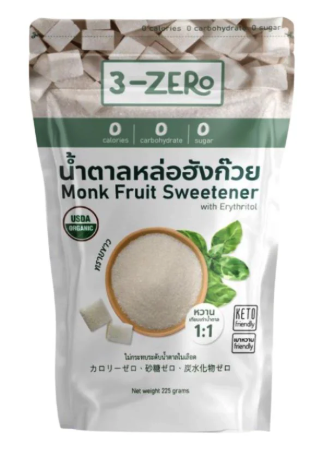
🛒 Buy this ingredient online
(Links not available)
💡 Monk Fruit Sweetener (Nam Tan Lo Hang Guay) is an alternative sweetener that has gained immense popularity among health-conscious individuals, ketogenic (Keto) dieters, and diabetics. This is because it provides natural sweetness with zero calories and no
1. Origin and Natural Sweetness
Monk fruit is a herbaceous perennial vine in the gourd family, native to southern China. Unlike other fruits, its sweetness does not come from fructose or glucose, but rather from a group of unique triterpene glycoside antioxidants called Mogrosides (specifically Mogroside V).
150–250 Times Sweeter Than Sugar: Because pure mogroside is intensely sweet, commercial "monk fruit sugar" crystals are typically blended with Erythritol or Inulin. This dilutes the sweetness to a 1:1 ratio with regular granulated sugar, making it much easier to measure and use in everyday cooking.
2. Health Benefits (Key Highlights)
0 Calories & 0 Net Carbs: The body does not metabolize mogrosides for energy, meaning it contributes zero calories to your diet.
Zero Glycemic Index (GI = 0): It does not trigger insulin secretion, preventing blood sugar spikes. This makes it completely safe for diabetics and those on a strict keto diet.
Clean Sweetness with No Bitter Aftertaste: Unlike Stevia, which often leaves a bitter or licorice-like aftertaste at the back of the tongue, monk fruit offers a smooth, clean sweetness that closely mimics the profile of real sugar.
Does Not Cause Tooth Decay: Oral bacteria cannot metabolize this compound into harmful acids that erode tooth enamel.
3. Culinary and Baking Applications
Monk fruit sweetener is highly heat-stable, making it excellent for cooking, stewing, and baking.
Advantages in Baking
High Heat Tolerance: Its chemical structure and sweetness profile do not break down when subjected to high oven temperatures or long simmering times.
Excellent Solubility: It dissolves seamlessly in liquids, making it perfect for boiling or stewing.
Food Science Limitations to Consider
Because it lacks the chemical properties of sucrose (sucrose/table sugar), you may need to adjust your recipes when baking:
No Caramelization: Monk fruit sweetener cannot caramelize (melt into a brown, fragrant syrup) like regular sugar does.
Impact on Texture and Structure: In traditional baking, sugar retains moisture to keep baked goods soft and helps stabilize egg foam structures (such as in chiffon or sponge cakes). Monk fruit (especially when blended with erythritol) lacks these properties, which can result in a slightly drier texture or a more fragile structure if alternative stabilizers are not used.
The "Cooling Effect": If you use a brand with a high percentage of erythritol, you might notice a slight, refreshing cooling sensation on your tongue when eating the finished product.
4. How to Choose the Right Type
In the market, you will generally find two main varieties:
Golden / Brown: This type has a flavor profile similar to brown sugar or molasses, offering a rich, warm aroma. It is ideal for coffee, savory dishes with deep flavors, or traditional desserts.
Classic / White: This type provides a clean, neutral sweetness without altering the color or aroma of your dish. It is best suited for Western-style pastries or recipes where you want the natural colors of the main ingredients to shine.
Tip: Always check the ingredient label on the back before purchasing to see what it is blended with (e.g., Monk Fruit Extract + Erythritol) so you can accurately adjust your recipe ratios.